
Unlock Elite Winger Breakout Habits: Pat Maroon’s Secrets for Puck Possession
Introduction: Why Elite Winger Breakout Habits Define the Game
In the high-stakes world of ice hockey, the ability to transition quickly and efficiently from defense to offense is paramount. At the heart of this transition are elite Winger Breakout Habits, a critical skill set that can dictate the flow of a game and create scoring opportunities. Players who master these habits not only maintain possession under pressure but also become catalysts for their team’s offensive thrust. Puck possession is invaluable in hockey, much like ball control in football; it allows a team to dictate play, build confidence, and consistently generate attacking chances, as highlighted by ADM Kids.
The Anatomy of Elite Winger Breakout Habits: Unpacking Pat Maroon’s Approach
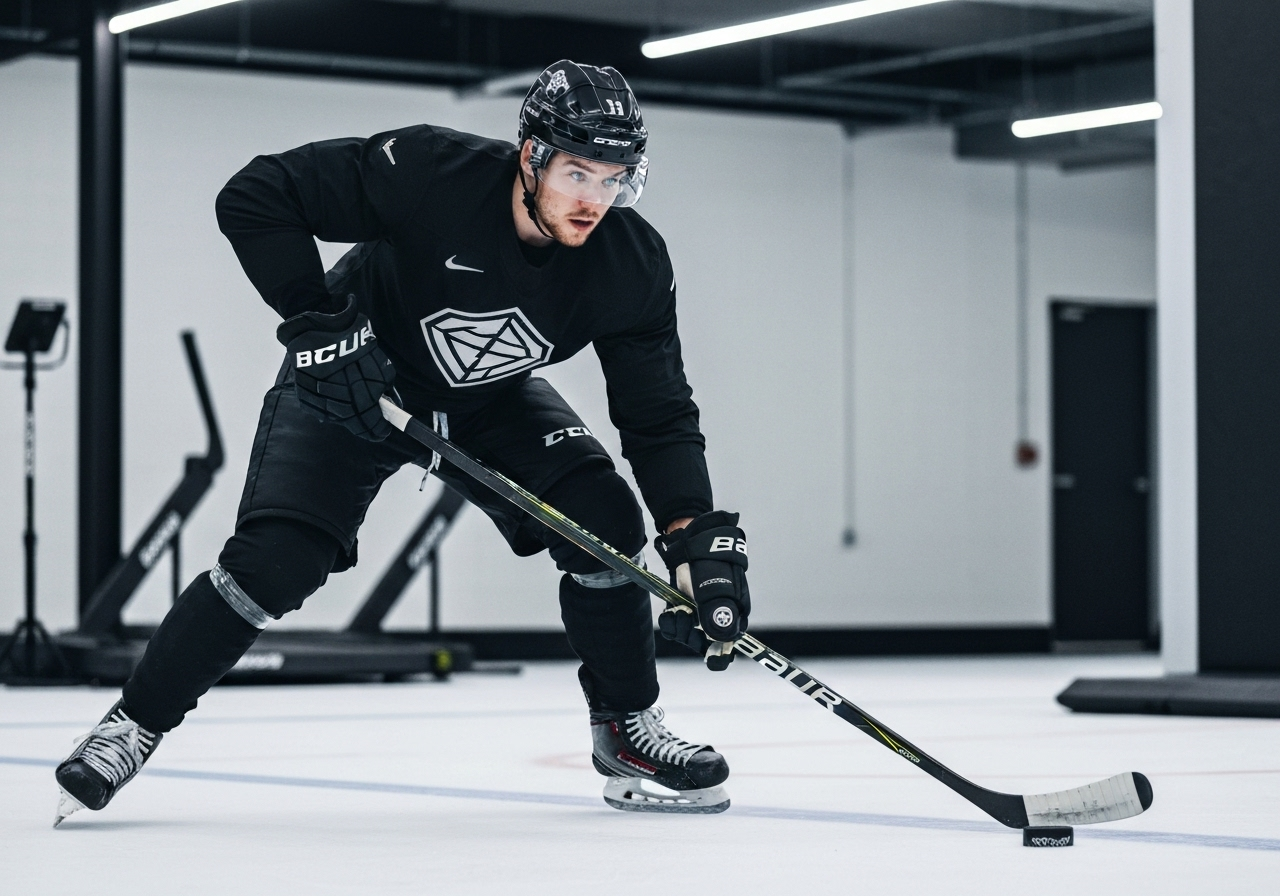
Few players exemplify robust winger breakout habits better than three-time Stanley Cup champion, Patrick “Big Rig” Maroon. Known for his imposing physical presence, Maroon’s success stems not just from his size, but from his exceptional puck protection skills and keen offensive instincts. He consistently demonstrates the ability to retrieve pucks along the boards, absorb defensive pressure, and make smart, quick decisions to move the puck up ice. Maroon’s player profile on Elite Prospects emphasizes his capacity to shield the puck effectively, a cornerstone of successful breakouts. His disciplined approach to breaking out of the defensive zone, often involving quick scans of the ice and precise passing, has been a significant factor in his teams’ success, as demonstrated in detailed analyses of his play, such as the one found on YouTube by The Hockey Think Tank.
Pat Maroon’s Playbook: Key Principles for Puck Possession Under Pressure
Pat Maroon’s effective breakouts are built on several key principles essential for any aspiring winger. These include:
- “Position before Possession”: Prioritizing body positioning to gain leverage against forecheckers before attempting to secure the puck.
- Heads-Up Play: Immediately scanning the ice upon puck retrieval to identify passing lanes and open teammates.
- Utilizing the Boards: Smartly banking the puck off the boards to elude pressure or create space for a teammate.
- The “Two Step Rule”: Taking two decisive steps with the puck before making a decision, allowing for better puck control and vision, as detailed in Hockey’s Arsenal. This brief pause prevents rushed plays and unnecessary turnovers.
- Puck Protection: Leveraging physical strength and stickhandling to shield the puck from opposing players, a crucial aspect of managing turnovers and winning puck battles, which are vital responsibilities for wingers, according to WBS Penguins.
Beyond the Boards: Strategic Decision-Making for Wingers
Beyond technical skills, strategic decision-making is a hallmark of elite winger breakouts. This involves split-second choices under immense pressure. Wingers must constantly anticipate the evolving play, reading forecheckers and defensive alignments to decide whether to carry the puck, make a short pass, or chip it out of the zone. The mental game is critical, with NHL players like Jake DeBrusk emphasizing that at the elite level, hockey is “95 to 5” mental over physical. This mental edge involves the ability to adapt, persevere, and maintain focus, even when facing adversity, as discussed by NHL.com.
Mastering Breakouts: On-Ice Drills for Enhanced Puck Control
Consistent practice is essential for developing and refining winger breakout habits. Incorporating targeted on-ice drills into your training regimen can significantly enhance puck control, decision-making, and overall breakout efficiency. Effective drills often simulate game scenarios, forcing players to react quickly under pressure:
- Winger Standard Breakout with Re-entry and Shot: This drill focuses on opening up for a pass, making a quick one-touch pass, receiving a return pass, and re-entering the offensive zone for a shot.
- Rim Pass and Give and Go Passing: Players practice retrieving rimmed pucks, making a precise pass to a coach or teammate, and executing a give-and-go along the red line before driving to the net.
- Breakout Transition 1-on-1: This drill emphasizes defensive zone puck retrieval, making a breakout pass, and then transitioning to defend a 1-on-1 situation, reinforcing both offensive and defensive responsibilities.
These drills, among others, are crucial for developing the foundational skills needed for successful breakouts, as highlighted by various hockey drill resources. Furthermore, off-ice stickhandling practice, similar to drills used by NHL stars like Patrick Kane, can significantly improve a player’s puck control and hand-eye coordination, which directly translates to on-ice performance and breakout success.
Off-Ice Advantage: Strengthening Core Skills for Explosive Breakouts
The foundation of explosive winger breakouts is built off the ice through dedicated strength and conditioning. A comprehensive off-season strength training program for hockey players is non-negotiable for enhancing performance and preventing injuries. Key areas of focus include:
- Foundational Strength and Hypertrophy: Building a solid strength base and muscular development to support intense on-ice movements.
- Power and Explosiveness: Incorporating plyometrics and power-focused exercises to generate maximum force for powerful strides and quick changes of direction.
- Core Stability: Strengthening the entire core musculature is vital for shot power, balance, and efficient force transfer from the lower body to the stick.
- Mobility and Flexibility: Improving range of motion in the hips and thoracic spine is crucial for a full wind-up and powerful rotational movements.
- Grip Strength: Often overlooked, targeted grip training enhances control and power for wrist shots, snapshots, and passes, contributing to a “heavier” shot, as discussed in detail by Charlotte Hockey Lab’s insights on shot power.
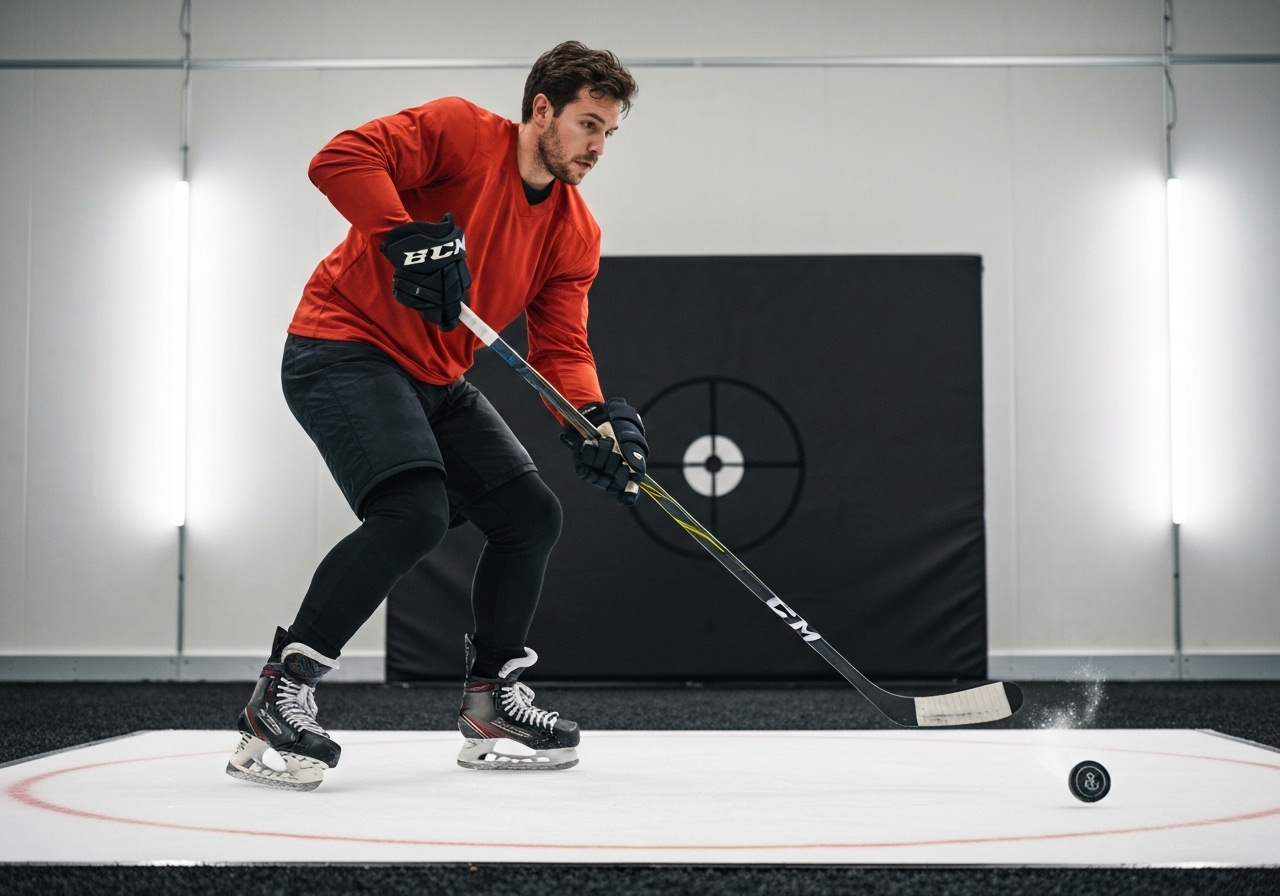
At Charlotte Hockey Lab, players have access to cutting-edge technology like RapidShot Systems, which provides immediate feedback on shot speed and accuracy, and skating treadmills, which build leg and core strength essential for powerful strides and stability during breakouts. This advanced technology helps translate off-ice gains directly to on-ice performance.
The Mental Game: Anticipation and Composure in Critical Moments
Beyond physical and technical skills, mental fortitude plays an equally critical role in executing successful winger breakouts. The ability to anticipate plays, maintain composure under pressure, and quickly recover from mistakes distinguishes elite players. Cognitive training programs can significantly enhance these mental skills:
- Enhancing Focus and Concentration: Training to block out distractions and direct attention to crucial cues, allowing players to better track the puck and anticipate movements.
- Improving Decision-Making Abilities: Developing rapid decision-making skills to assess options and execute effective strategies in split-second situations, a key benefit of cognitive training according to USA Hockey IntelliGym.
- Managing Pressure and Anxiety: Equipping players with techniques to stay composed and regulate emotions during high-pressure moments.
- Strengthening Resilience and Composure: Cultivating mental toughness to bounce back from errors and maintain confidence throughout the game.
- Maximizing Performance through Visualization: Teaching players to mentally rehearse game scenarios and successful plays, enhancing muscle memory and reaction times.
Charlotte Hockey Lab integrates these principles into its training, recognizing that mental toughness for individual hockey training is paramount. The facility’s structured environment, with its objective metrics and repeatable scenarios, inherently fosters mental development alongside physical skills, providing players with the ideal setting to sharpen their hockey mindset.
Conclusion: Consistent Practice for Unlocking Your Winger Potential
Mastering elite winger breakout habits requires a holistic approach that integrates physical conditioning, technical skill development, and mental toughness. By studying the approach of players like Pat Maroon and committing to consistent, deliberate practice, players can significantly elevate their game. Utilizing resources such as those found at Charlotte Hockey Lab, with its advanced equipment and focus on comprehensive development, provides an invaluable advantage. The journey to becoming an elite winger is a continuous process of refinement and dedication, ultimately leading to improved puck possession, strategic playmaking, and a greater impact on every game.
Ready to elevate your game? Contact us today to learn more about our training programs!
Related Posts






We use only the finest ingredients to produce stellar tastes.