
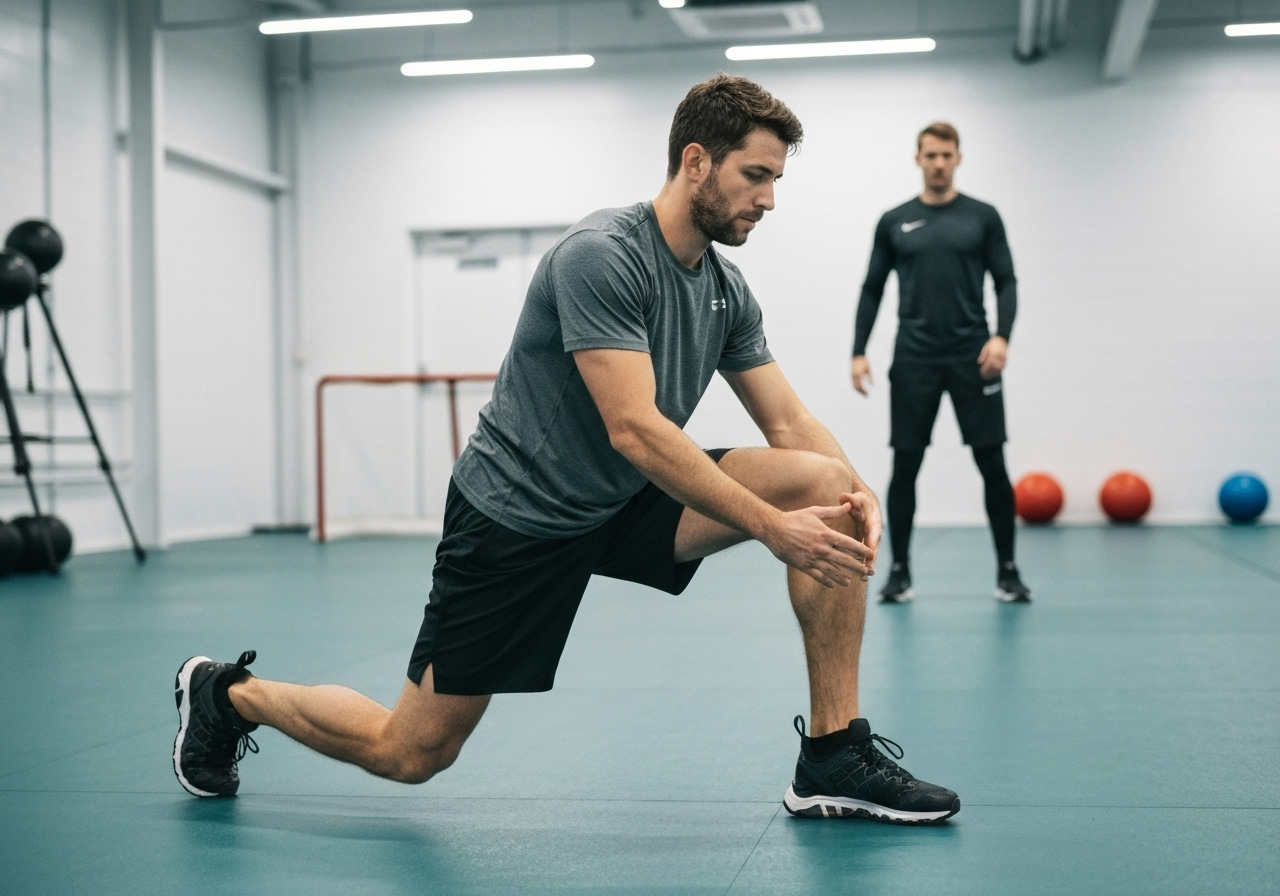
Boost Your Game: Essential Stretches For Hockey Players to Maximize Performance and Prevent Injuries
The Critical Link: How Flexibility Fuels Hockey Performance and Prevents Injuries
In the high-octane world of ice hockey, every edge counts. While strength, speed, and skill are paramount, the often-overlooked secret weapon for maximizing on-ice potential and significantly reducing injury risk is flexibility. Effective Stretches For Hockey players are not just about “touching your toes”; they are a fundamental component of a comprehensive training regimen designed to enhance athletic movement and safeguard the body.
Hockey demands an incredible range of motion, from powerful skating strides and sharp turns to explosive shots and agile puck handling. Without adequate flexibility, these movements can become restricted, leading to decreased performance and an increased vulnerability to injuries. As noted by Relentless Hockey, the very nature of skating forces players into positions that can create dysfunction in the body, leading to chronic tightness in areas like the hips and shoulders. Improving flexibility allows players to achieve deeper, more efficient positions, enabling greater power generation, smoother transitions, and superior control on the ice. Furthermore, a flexible body is a resilient body. By increasing the elasticity of muscles and the mobility of joints, players can better absorb impacts and reduce the likelihood of common hockey-related injuries such as groin strains, hamstring pulls, and hip issues. The ability to move freely and without restriction is directly correlated to sustained performance and career longevity in this demanding sport.
Understanding Flexibility: Beyond Just “Being Tight”
The terms “flexibility” and “mobility” are often used interchangeably, but in the context of hockey performance, understanding their distinction is crucial. Flexibility refers to the passive range of motion of a muscle or group of muscles, essentially how far a joint can move with external assistance. Mobility, on the other hand, is the active, controlled range of motion an athlete can achieve and stabilize on their own. As explained by HockeyTraining.com in their Hockey Mobility Training Guide, true mobility encompasses flexibility, technique, and strength—meaning you can not only reach a position but control it effectively.
For hockey players, chronic tightness is a common issue. The sustained hip flexion from skating and sitting, coupled with the asymmetrical posture from holding a stick, often leads to shortened hip flexors, tight hamstrings, restricted thoracic spines, and imbalanced shoulders. These limitations aren’t just uncomfortable; they directly impact on-ice movement efficiency. For instance, limited hip mobility can restrict stride length and power, while a stiff T-spine can reduce rotational power for shots. Addressing these areas goes beyond simple static stretching; it requires intentional, active mobility work that challenges the nervous system to control new ranges of motion. This focus on controlled movement through full ranges is what truly unlocks an athlete’s potential.
Stretches For Hockey: Maximizing Your On-Ice Potential
Implementing a targeted stretching and mobility routine is essential for any hockey player aiming to maximize their on-ice potential. The following are key areas and effective Stretches For Hockey to incorporate, drawing from expert recommendations:
Hip & Groin Mobility
- Couch Stretch: This is a cornerstone for addressing notoriously tight hip flexors and quads, often referred to as “hockey hips.” It helps to open up the anterior musculature of the hips.
- 90/90 Stretch: Critical for improving both internal and external hip rotation, which is vital for agile skating and powerful movements.
- Groin/Adductor Rocks: Targets the adductor muscles, which are highly susceptible to injury in hockey players. Improving their flexibility can significantly reduce groin strain risk.
Upper Body & Thoracic Spine
- Lying T Pec Stretch: Counteracts the forward-rounded shoulder posture common in hockey players, helping to restore proper alignment and loosen tight pecs.
- Banded Lat Stretch: Addresses tension in the latissimus dorsi, a powerful muscle that, when tight, can restrict upper body movement and back health.
- Hockey Stick T-Spine Extension: Specifically targets the thoracic spine (upper back), improving extension and rotation, which is crucial for shot power and preventing lower back compensation.
- Side Lying Book Openers: Enhances spinal rotational mobility, directly benefiting slap shots and one-timers.
Lower Body & Ankle Mobility
- Toes Elevated Ankle Gliders: Essential for improving ankle dorsiflexion, which allows for a deeper knee bend, more aggressive edgework, and increased stride power in skating.
- Active/Passive Hamstring Stretch: Addresses tight hamstrings, which can lead to knee and lower back pain, and hinder glute activation.
- Cossack Squats: A dynamic mobility exercise that targets ankles, groins, and hips, improving the deep hip position necessary for low skating mechanics.
These stretches, when performed consistently and with intention, can lead to noticeable improvements in movement, reduced chronic pain, and enhanced performance on the ice.
Dynamic vs. Static: The Right Stretch at the Right Time for Hockey Players
The debate between dynamic and static stretching has been a long-standing one in sports science, but for hockey players, the consensus is clear: both have their place, but their timing is crucial. Understanding when to use each type of stretch is key to optimizing performance and injury prevention.
Dynamic Stretching: Before Activity
Dynamic stretching involves moving your body through a full range of motion, mimicking sport-specific movements. This type of stretching is ideal for pre-game or pre-workout warm-ups. Benefits include:
- Increasing core body temperature.
- Activating the central nervous system.
- Improving range of motion without decreasing power output.
- Preparing muscles for the explosive, multi-directional demands of hockey.
Research published in the Bulletin of Faculty of Physical Therapy highlights that adding dynamic stretching to warm-ups can significantly improve flexibility, agility, and dynamic balance in junior field hockey players. Examples include leg swings, torso twists, and walking lunges with a twist.
Static Stretching: After Activity or On Off-Days
Static stretching involves holding a stretch for a sustained period (typically 15-60 seconds). While once commonly recommended before activity, studies suggest that pre-exercise static stretching can temporarily decrease muscular power and strength. Therefore, it is best reserved for:
- Post-workout or post-game cool-downs, when muscles are warm and more receptive to lengthening.
- Dedicated mobility sessions on off-days, away from intense on-ice or dryland training.
Static stretching is effective for improving long-term flexibility and increasing overall range of motion, which helps reduce chronic tightness and promotes recovery. It allows muscles to relax and release tension built up during intense play. The key is to prioritize dynamic movements for preparation and static stretches for recovery and long-term flexibility gains.
Smart Stretching Strategies: The Four Golden Rules for Hockey Athletes
To truly unlock the benefits of flexibility and mobility, hockey players should adhere to a set of guiding principles. HockeyTraining.com’s article on Optimizing Flexibility For Peak Hockey Performance outlines four golden rules that serve as an excellent framework for smart stretching strategies:
- Static Stretch on Its Own Day or Long After Workouts: Avoid static stretching immediately before practices or games, as it can temporarily reduce explosive power. Instead, perform static stretches on rest days or as part of your cool-down routine, well after your intense training is complete.
- Dynamic Stretch Pre-Workout/Pre-Game: Dynamic stretching is the go-to for warm-ups. These movements prepare your body for activity by increasing blood flow, improving range of motion, and activating muscles relevant to hockey movements.
- Stretch Only If You Need It: Excessive flexibility beyond what is required for hockey can actually lead to hypermobility and instability, increasing injury risk. Focus on areas where you genuinely experience tightness or limited range of motion, rather than aiming to be as flexible as a gymnast.
- Combine Flexibility with Intelligent Strength Training: When you increase flexibility in a tight area, you’re reducing the body’s natural stiffness that was likely protecting a weakness. It’s crucial to pair flexibility work with total-body strength training to build adequate stability and strength within the newly gained range of motion. This ensures that your increased mobility translates into controlled, powerful movements, not vulnerability.
By following these rules, hockey players can ensure their stretching efforts are effective, purposeful, and contribute directly to enhanced performance and injury prevention.
Integrating Flexibility into Your Charlotte Hockey Lab Training
At Charlotte Hockey Lab, our commitment to holistic player development extends beyond on-ice skills and traditional dryland training. We understand that optimal performance and injury resilience are deeply rooted in a player’s flexibility and mobility. Integrating targeted flexibility routines into your Charlotte Hockey Lab training regimen is not an add-on; it’s a synergistic component that amplifies every other aspect of your game.
Forwards can enhance their stride length and quick bursts by focusing on hip flexor and adductor mobility. Defensemen can improve their pivotal turns and gap control with better thoracic rotation and ankle flexibility. Even goalies, contrary to some older beliefs, significantly benefit from improved hip mobility and core control for powerful butterfly pushes and efficient recovery saves, as highlighted by resources like Maria Mountain’s Goalie Training Pro insights.
Our programs at Charlotte Hockey Lab are designed to incorporate dynamic warm-ups before on-ice sessions and dryland workouts, ensuring your muscles are primed for explosive movements. Post-training, we emphasize cool-down routines that include static stretches to aid recovery and gradually improve long-term flexibility. This integrated approach ensures that every strength gain, every skill refinement, and every strategic lesson is built upon a foundation of a truly mobile and resilient hockey body.
Unlock Your Full Game: The Long-Term Benefits of a Flexible Hockey Body
The journey to becoming a complete hockey player is ongoing, and while immediate performance gains from a solid stretching routine are evident, the long-term benefits of a flexible and mobile body are arguably even more profound. Committing to consistent Stretches For Hockey players isn’t just about this season; it’s about extending your career, reducing chronic pain, and maintaining a high quality of life both on and off the ice.
A body that moves freely is less susceptible to the cumulative wear and tear that often leads to nagging injuries and premature retirement from the sport. Enhanced mobility helps delay the onset of age-related stiffness and allows for more fluid, less compensated movements, preserving joint health over decades of play. Furthermore, the discipline and body awareness cultivated through regular stretching routines translate into better overall physical literacy and self-care habits. Ultimately, a flexible hockey body means more years enjoying the game you love, with less discomfort and a greater capacity for explosive, agile, and powerful play.
Have more questions or want to get in touch? Visit our Contact Us page. We look forward to hearing from you.
Related Posts





We use only the finest ingredients to produce stellar tastes.