Elevate Your Game: Finding Your Ideal Hockey Stick Length with Charlotte Hockey Lab
The Foundation of Your Game: Why Correct Stick Length is Crucial
In hockey, every piece of equipment plays a vital role in a player’s performance, but perhaps none is as personal and impactful as the hockey stick. The optimal hockey stick length is not a one-size-fits-all measurement; it’s a critical factor that can significantly influence everything from puck control to shooting power. An incorrectly sized stick can hinder development, create bad habits, and ultimately limit a player’s potential on the ice. Finding the right length ensures that a player can execute fundamental skills with maximum efficiency and comfort, laying a solid foundation for advanced techniques.
Finding Your Sweet Spot: How to Measure Your Ideal Hockey Stick Length
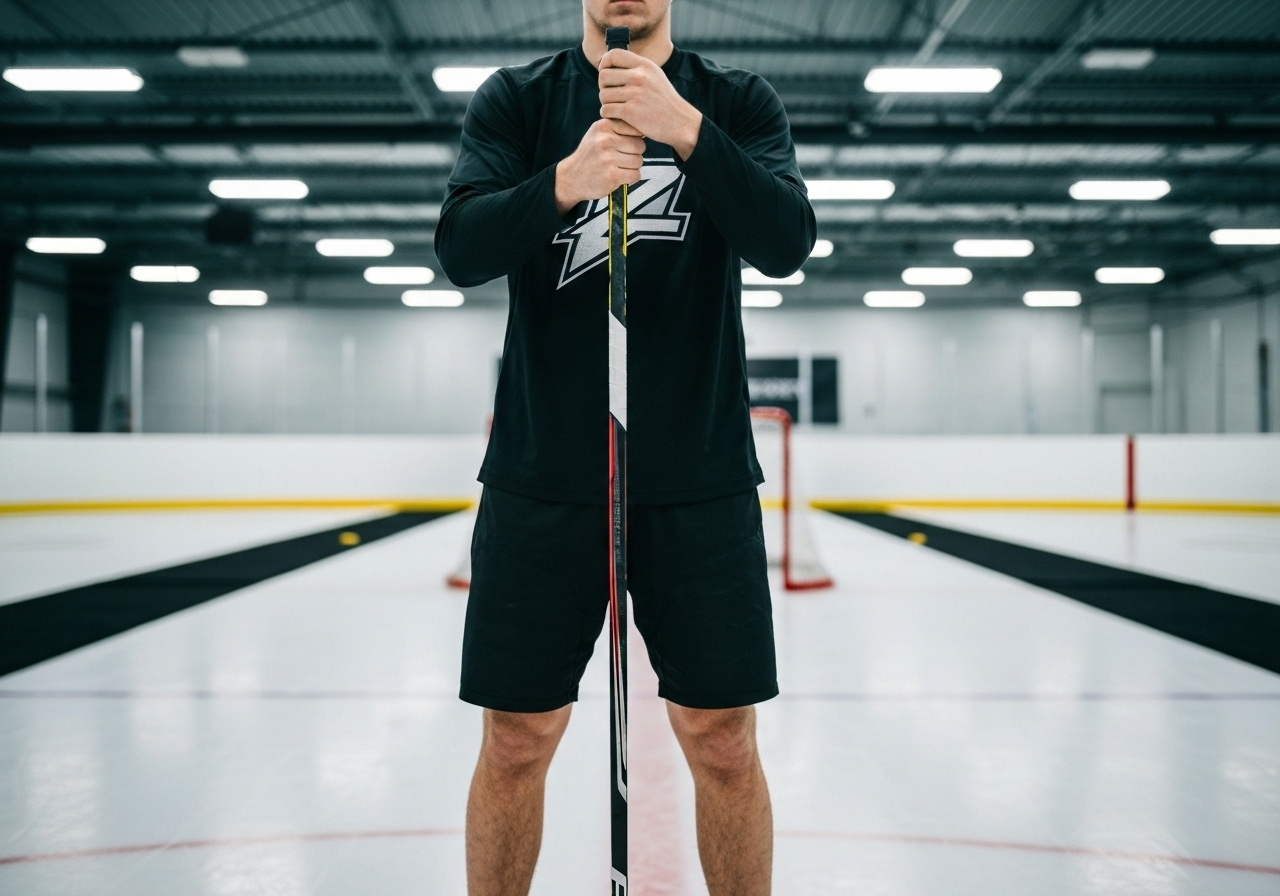
Determining the ideal hockey stick length involves a few key measurements and considerations. Generally, players measure their stick in two ways: off-skates and on-skates.
- Off-Skates: When standing straight without skates, the stick should typically reach between your chin and nose. A common guideline is to have the stick reach your chin.
- On-Skates: When wearing skates, the stick should usually reach between your nose and eyebrows. Many players prefer it to hit around their chin or just below their nose while on skates for optimal control.
Beyond height, the “lie” of the stick, which is the angle of the blade to the shaft, is equally important. A stick with the correct lie will allow the entire bottom edge of the blade to sit flat on the ice when a player is in their natural skating stance. Uneven wear on the heel or toe of the blade tape often signals that the lie or length is not suited for the player’s posture, indicating that an adjustment should be made to achieve proper blade contact and maximize puck feel.
Impact on Performance: Skating, Stickhandling, and Passing
The length of your hockey stick directly correlates with your on-ice performance, particularly in areas like skating, stickhandling, and passing. A shorter stick generally offers enhanced puck control and maneuverability, allowing for quicker changes in direction and tighter stickhandling in congested areas. This can be a significant advantage for players who prioritize agility and intricate puck work. Conversely, a longer stick provides greater reach, which can be beneficial for:
- Poke Checks: Extending your reach to disrupt opponents.
- Interceptions: Covering more ice to break up passes.
- Defensive Coverage: Maintaining a larger defensive zone.
However, excessive length can make puck handling cumbersome and slow down quick puck movements. Passing accuracy and power are also affected; a stick that is too long or too short can throw off the mechanics of a crisp pass.
Unleash Your Shot: The Connection Between Stick Length and Shooting Power
The impact of hockey stick length on shooting power is often underestimated. A properly sized stick allows a player to effectively load and release energy into their shots, whether it’s a powerful slap shot or a quick wrist shot. A stick that is too long can make it difficult to get enough leverage and can reduce the effective flex, diminishing shot power. On the other hand, a stick that is too short might force a player to lean over too much, compromising balance and limiting the transfer of body weight into the shot.
The relationship between stick length and stick flex is also crucial. When you cut down a stick, you effectively make it stiffer. This means a player who prefers a certain flex might need to start with a slightly longer stick of higher flex if they intend to cut it, to achieve their desired feel. Mastering these nuances can dramatically improve a player’s ability to unleash powerful and accurate shots on goal, a skill that can be further honed through dedicated training programs at facilities like Charlotte Hockey Lab that offer advanced shooting technology such as RapidShot.
Position-Specific Preferences: Forwards, Defensemen, and Goalies
While general guidelines exist, ideal hockey stick length often varies by player position and individual style. Many forwards, especially those who prioritize quick hands and close-quarters puck battles, tend to prefer shorter sticks. NHL stars like Tage Thompson, Auston Matthews, and Alex Ovechkin are known to use shorter sticks, which enables them to pull pucks into their feet easily and maintain tight control. This preference aids in rapid dekes, quick releases, and fine-tuned stickhandling.
For defensemen, the debate around stick length is particularly interesting. Traditionally, longer sticks have been favored for their extended reach, aiding in poke checks, blocking passing lanes, and maintaining gap control. NHL coach Jon Cooper, with a background in lacrosse, points out the advantage of longer sticks for defensive deterrence. However, there’s a trade-off. While a player like Zdeno Chara leveraged his exemption for a 65-inch stick for exceptional defensive reach, he sometimes struggled with pucks in tight spaces. Conversely, offensive defensemen like Matt Grzelcyk have opted for shorter sticks to enhance puck handling and facilitate offensive rushes. The consensus, as articulated by Florida Panthers coach Paul Maurice, is to “use a long stick if you can, but don’t use a long stick if you can’t,” emphasizing the balance between reach and puck control for the two-way nature of the position. No NHL defensemen are currently requesting the 65-inch exemption, highlighting the continued importance of puck control even for larger players.
Goalies also have specific requirements for their sticks, which are designed differently with a wider paddle and a shorter shaft, optimized for blocking shots and playing the puck around the net.
Cutting Down Your Stick: Tips for Optimal Customization
Customizing your hockey stick length is a common practice, but it requires careful consideration. When cutting a stick, it’s always advisable to start by cutting off small increments. You can always cut more, but you can’t add length back. Remember that cutting a stick will increase its stiffness (flex). If you’re sensitive to flex, you might need to adjust your initial stick choice accordingly. Many players experiment with different lengths during off-ice shooting sessions or informal practices to find the length that feels most natural and effective for their personal style of play before committing to a permanent cut.
Charlotte Hockey Lab’s Approach: Personalized Fit for Peak Performance
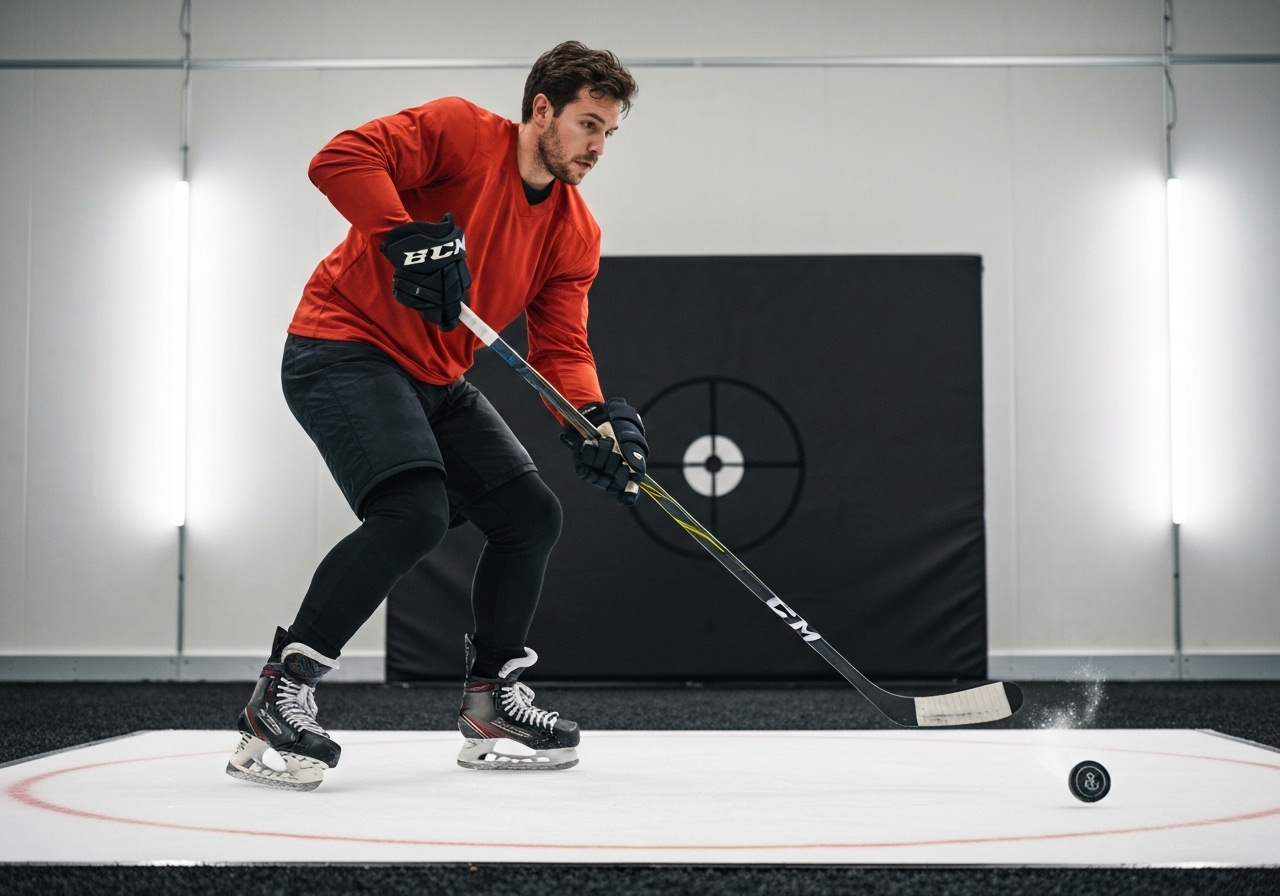
At Charlotte Hockey Lab, we understand that finding the ideal hockey stick length is a highly personal journey crucial for peak performance. Our facility offers a unique environment where players can explore and fine-tune their equipment choices with expert guidance. Utilizing state-of-the-art technology and personalized coaching, we help athletes assess their stick length in relation to their skating posture, hand position, and preferred playing style. Our RapidShot shooting lanes, for example, allow players to test different stick lengths and flexes in a controlled setting, providing immediate feedback on shot power and accuracy. This personalized approach ensures that every player leaves with a stick perfectly tailored to their needs, maximizing their comfort and effectiveness on the ice.
Elevate Your Performance: Finalizing Your Perfect Stick Length
Ultimately, the perfect hockey stick length is a personal choice that balances tradition, performance, and individual preference. While general guidelines provide a starting point, experimentation and self-awareness are key. As players evolve and their skills develop, their ideal stick length may also change. Continuously assessing and adjusting your equipment is an essential part of refining your game. By understanding the intricate relationship between stick length and performance, and by leveraging resources like those available at Charlotte Hockey Lab, players can ensure their stick acts as a true extension of their body, allowing them to truly elevate their game.
Ready to elevate your game? Visit our Contact Us page to learn more!
Related Posts





We use only the finest ingredients to produce stellar tastes.